Lesson 19 of 22 · ~22 min
Internal Network Penetration Testing
Internal Network Penetration Testing — authorized lab context only.
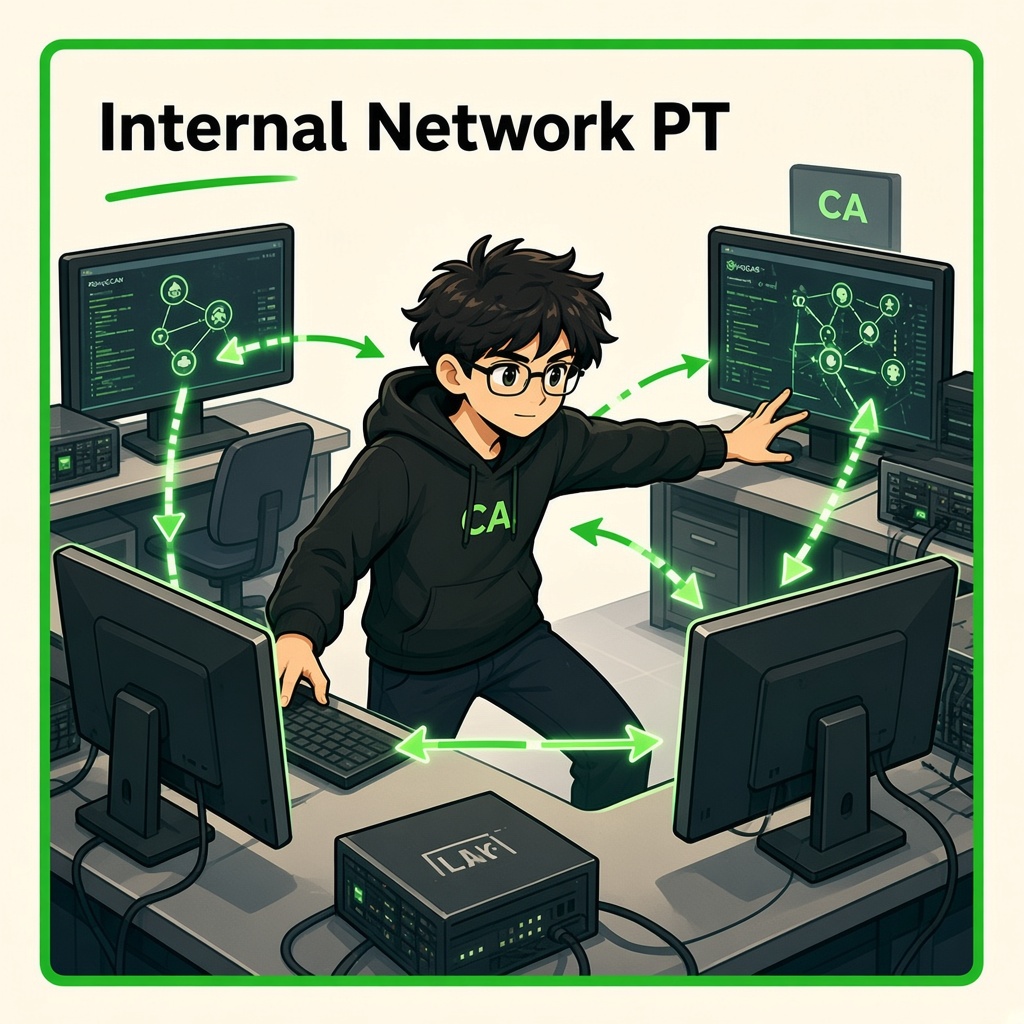
Internal Network Penetration Testing
Course: Ethical Hacking & Penetration Testing
Level: Intermediate
Module: Offensive security (authorized)
Duration: 45–60 min
Learning objectives
- Explain Internal Network Penetration Testing in plain language
- Connect the idea to everyday systems (shops, banks, college portals) without attacking them
- Know what “in scope / out of scope” means for this topic
- Complete the knowledge check and recall the ethical boundary
1. In one sentence
Assume attacker is already inside (phishing laptop / bad USB / VPN) — test how far they can go.
2. Why it matters (daily life)
Target 2013 story (vendor path) and ransomware lateral movement show flat internal nets are dangerous.
3. How it works
From one host: enum peers, creds, shares, AD, jump hosts — document blast radius and segmentation gaps.
4. Real-world / authorized lab example
Lab: foothold VM → discover open SMB shares with sensitive files → report least-privilege share ACLs.
5. Defender’s view
If you are blue team or a developer: assume an authorized tester (or an attacker) will apply this technique. Reduce exposure, monitor loudly for active recon, and fix findings with clear owners and due dates.
6. Common mistakes
Ignoring detection/blue-team coordination on long internal tests.
7. Practical habit (authorized systems only)
- Confirm written permission and IP/domain scope.
- Practice the idea on CYNARKS Labs / intentionally vulnerable VMs.
- Keep a dated note: what you tried, what you saw, what you recommend.
- Never “verify” on Instagram, PhonePe, college portals, or random internet hosts.
8. Memory tip
Explain this step to a friend in one minute using a college portal or small-shop website story — without attacking anything real.
Knowledge Check
Q1. Internal vs external focus?
A. Follow written scope, document findings, and report responsibly
B. Attack any live public site “for practice” without permission
C. Skip notes and only keep screenshots on a personal phone
D. Publish full exploit details before the client can patch
Q2. What is lateral movement?
A. Follow written scope, document findings, and report responsibly
B. Attack any live public site “for practice” without permission
C. Skip notes and only keep screenshots on a personal phone
D. Publish full exploit details before the client can patch
Q3. Name a control that limits blast radius.?
A. Follow written scope, document findings, and report responsibly
B. Attack any live public site “for practice” without permission
C. Skip notes and only keep screenshots on a personal phone
D. Publish full exploit details before the client can patch
Answer Key
- A
- A
- A
Lesson Summary
Internal Network Penetration Testing sits inside a professional pentest workflow: permission → careful technique → evidence → fix. Skill without authorization is not “practice” — it is risk.
Coming next
Continue the Ethical Hacking path in syllabus order. Stay in scope.
CYNARKS Academy – Learn to Understand. Practice to Defend.
Practice only in CYNARKS Labs or systems with written authorization.