Lesson 10 of 22 · ~22 min
Server-Side Request Forgery (SSRF)
Cloud metadata risks in labs.
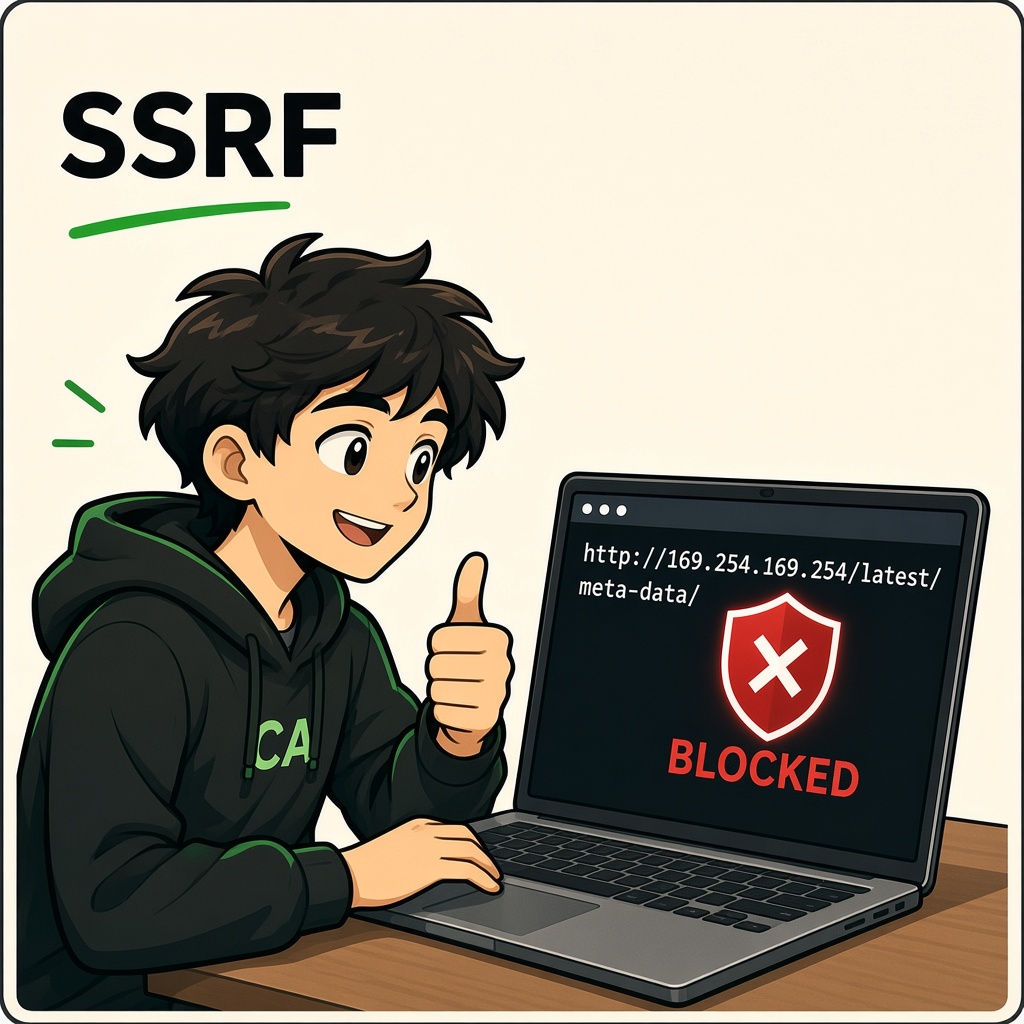
Server-Side Request Forgery (SSRF)
Course: Web Application Security
Level: Intermediate
Module: AppSec
Duration: 45–60 min
Learning objectives
- Explain Server-Side Request Forgery (SSRF) the way a junior AppSec engineer would
- Map the idea to login, checkout, or API flows you already use
- Know a safe lab way to observe the issue (Juice Shop / CYNARKS Labs)
- Pass the knowledge check without attacking real sites
1. In one sentence
SSRF = the server fetches a URL the attacker chooses — hitting internal services you can’t reach directly.
2. Why it matters (daily life)
Cloud metadata endpoints (historic Capital One teaching story) and internal admin panels are classic impacts.
3. How it works
Allowlists, block link-local/metadata IPs, don’t follow redirects blindly, network egress controls.
4. Real-world / authorized lab example
Lab webhook feature fetching http://169.254.169.254/ style target in simulator → show why allowlists matter.
5. Fix mindset (builders)
Prefer input validation, parameterized queries / safe APIs, least-privilege sessions, security headers, and regression tests. “Patch later” is how IDOR and XSS become incidents.
6. Common mistakes
Passing raw user URLs to server-side HTTP clients with no checks.
7. Practical habit (authorized labs only)
- Reproduce on an intentional vulnerable app in Labs.
- Capture request/response notes (redact secrets).
- Write the fix in one paragraph a developer can ship.
- Retest after the fix — same steps, expect fail-closed.
8. Memory tip
Explain this using Gmail login, Instagram, PhonePe checkout, or a college portal — as a story, without attacking real sites.
 Practice intercepts only on authorized lab apps (e.g. Juice Shop in Labs).
Knowledge Check
Q1. Who makes the request in SSRF?
A. Test only on authorized lab apps and report clear remediations
B. Probe live banking / college sites without written permission
C. Ignore HTTPS and mishandle sessions on purpose in production
D. Disable logging so findings cannot be traced
Q2. Why cloud metadata is sensitive?
A. Test only on authorized lab apps and report clear remediations
B. Probe live banking / college sites without written permission
C. Ignore HTTPS and mishandle sessions on purpose in production
D. Disable logging so findings cannot be traced
Q3. Name one control.?
A. Test only on authorized lab apps and report clear remediations
B. Probe live banking / college sites without written permission
C. Ignore HTTPS and mishandle sessions on purpose in production
D. Disable logging so findings cannot be traced
Answer Key
- A
- A
- A
Lesson Summary
Server-Side Request Forgery (SSRF) is a building block of modern web risk. Learn it deeply; practice only where you are allowed.
Coming next
Continue the Web Application Security syllabus. Keep your proxy pointed at lab targets only.
CYNARKS Academy – Learn to Understand. Practice to Defend.
Never test live PhonePe, Instagram, Razorpay merchant panels, or college portals without written permission.